

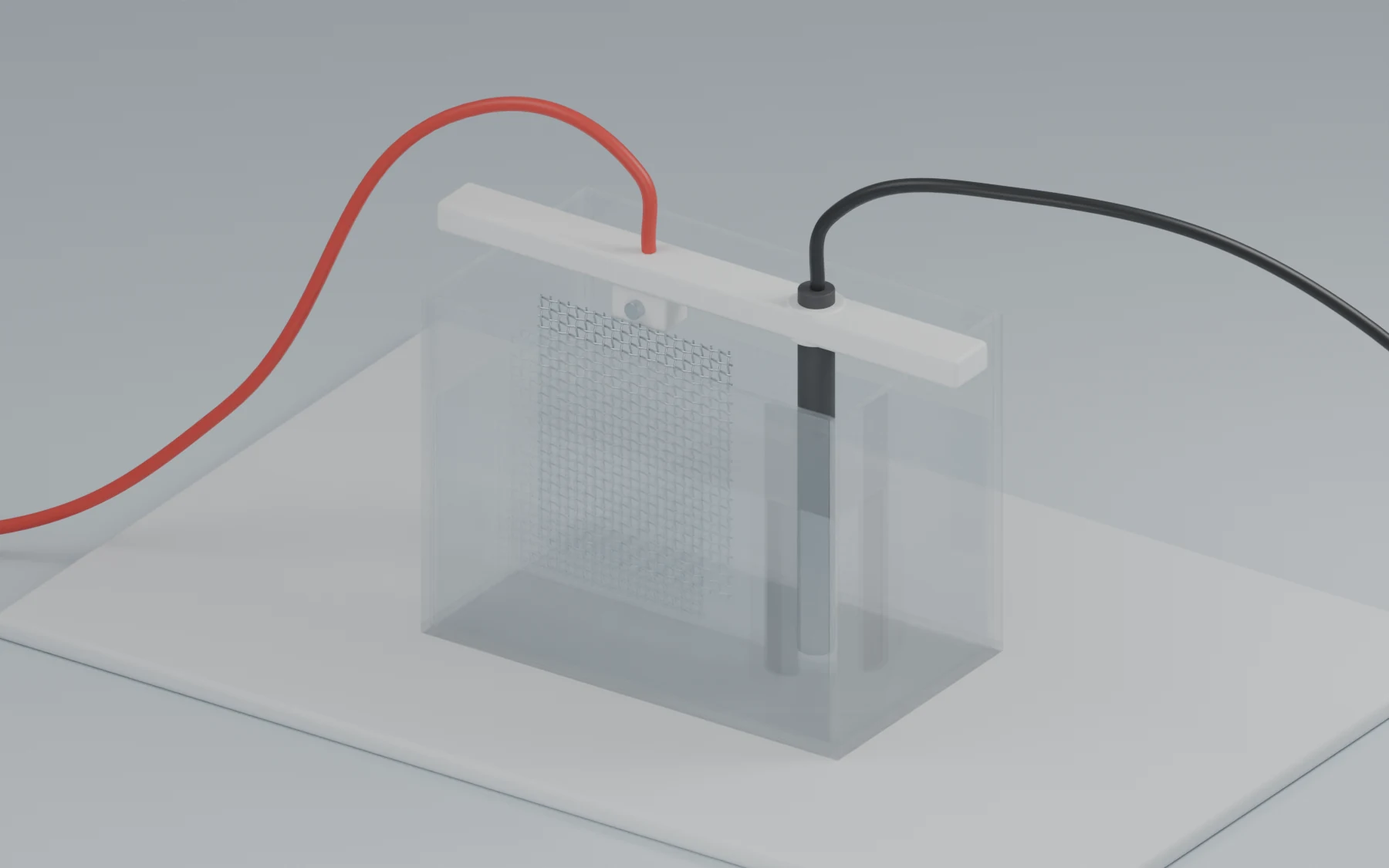
Illustration / rendering
Last updated:
Key facts
- AISI 316 stainless steel (EN 1.4401, V4A) contains molybdenum, which improves resistance to pitting and crevice corrosion in chloride-containing environments.
- Woven wire mesh combines a large metal surface with an open structure that the electrolyte can pass through. That makes it a common choice for cathodes and counter electrodes.
- Stainless steel is not suitable for every setup. Whether it works depends on the electrolyte, the potential range and the measuring method. Some experiments call for platinum, graphite or mixed-metal-oxide coated titanium (Ti-MMO) instead.
A note from the lab
A customer working in building materials research at a university recently shared some feedback on V4A stainless steel woven wire mesh: the cut size and the edges were right, and the mesh is now installed as the cathode in a corrosion current measurement in their test setup.
We don't know more about the experiment than that, and we won't guess. But the case raises questions we hear regularly from universities and research institutes: Why 316? Which mesh size? And what should you watch out for when building the setup?
One thing up front: experimental design is the responsibility of the research team. This article gives general background on the material, not a test method.
Why researchers choose 316 stainless steel
Molybdenum makes the difference in chlorides. Compared with 304 stainless steel (EN 1.4301), the molybdenum in 316 improves resistance to localized attack such as pitting and crevice corrosion when chlorides are present. In building materials research, where chloride-induced corrosion is a frequent subject, this is an important property. Our V4A wire mesh is woven from AISI 316 (EN 1.4401).
A passive cathode with a lot of surface. Studies on reinforcement corrosion describe macrocell setups in which a carbon steel anode is connected to a passive stainless steel cathode and the resulting current is measured. A cathode area larger than the anode area is often chosen so that the current is easy to measure. Wire mesh offers a large surface for its footprint, is light, and can be shaped easily.
Know the limits. 316 is corrosion resistant, not corrosion proof. High chloride levels, elevated temperature, low pH, oxidizing agents and crevices all increase the risk of pitting. If the mesh ends up being polarized anodically, it can dissolve and release metal ions into the electrolyte. That is why laboratory cells often use inert counter electrodes such as platinum or graphite, and why Ti-MMO is used in some applications.
Choosing mesh size and wire diameter
There is no single "right" mesh for a cathode. These general relationships help narrow it down:
- Surface area: Finer meshes put more wire into the same area, so the metal surface per square meter goes up. How much of that surface is actually active depends on your electrolyte and geometry.
- Openness: Coarser meshes are more open. Electrolyte and gas bubbles move through more easily, and if the mesh is embedded in mortar or concrete, the material can surround it better. Check that the opening suits the largest aggregate size.
- Stiffness: Thicker wire makes a stiffer mesh that keeps its shape and is easier to clamp and connect. Very fine meshes with thin wire bend and crease more easily.
- Consistency: For a test series, stay with one specification. Identical mesh keeps the electrode area and geometry comparable across specimens.
Our V4A range covers apertures from 0.075 mm to 2 mm. Three examples:
- 2 mm aperture, 0.56 mm wire – AISI 316 – open and stiff
- 1 mm aperture, 0.4 mm wire – AISI 316 – a middle ground
- 0.5 mm aperture, 0.32 mm wire – AISI 316 – more wire surface per area
These are examples, not a recommendation for a specific experiment. See all sizes in the V4A wire mesh (AISI 316 / 1.4401) category.
Why clean cut edges matter
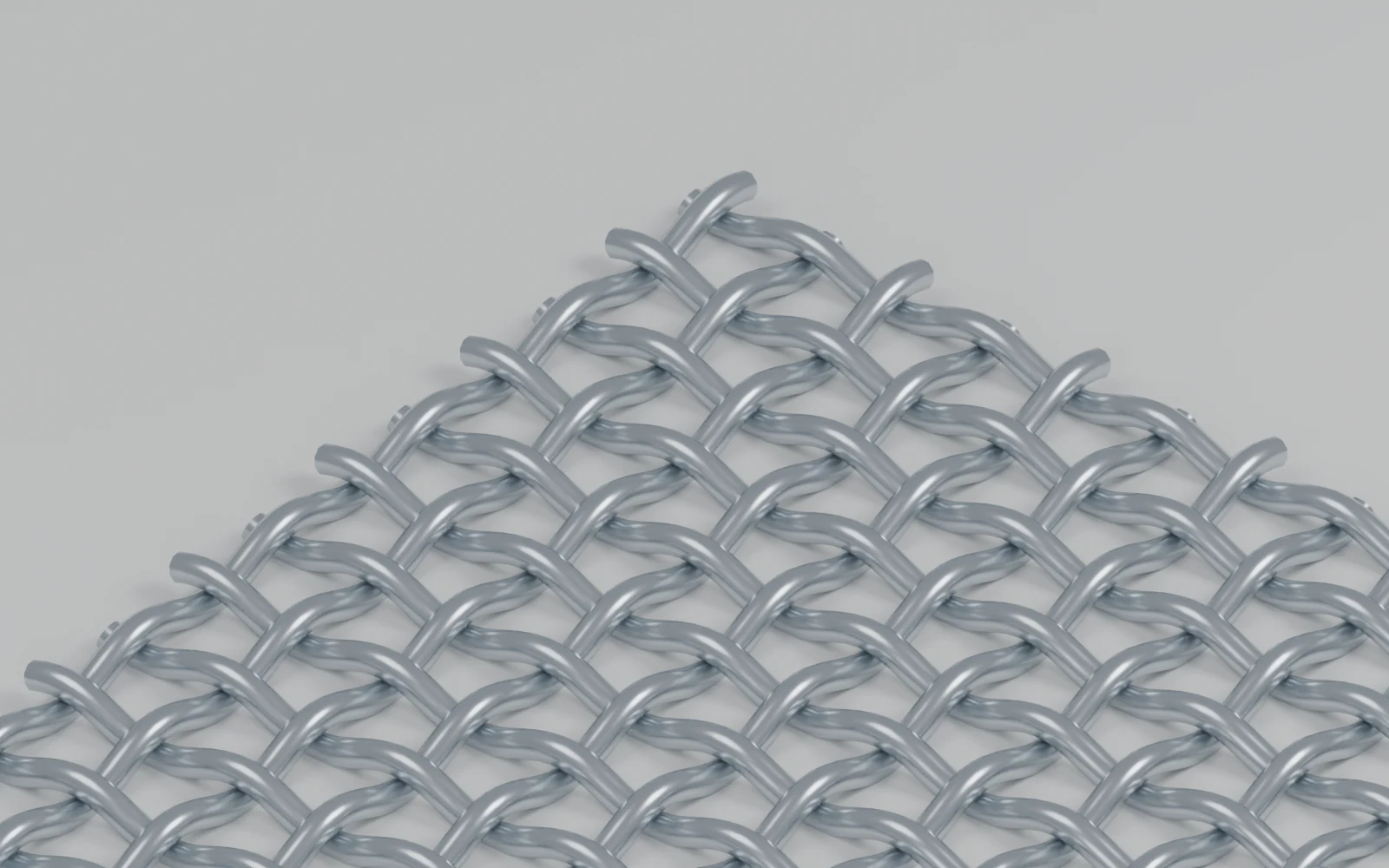
Our customer specifically mentioned the edges. For electrodes, that is more than a cosmetic detail:
- Defined area: Currents are often normalized to the electrode area. An accurate cut makes the area easier to determine and report.
- No loose wires: Frayed edges change the geometry. A stray wire end can touch another electrode or the reinforcement and short the circuit.
- Fewer weak spots: Crushed or bent wires at the edge can form crevices, which are typical starting points for corrosion on stainless steel.
- Safer handling: Clean edges are easier and safer to install.
On each product page you enter the width and length you need, and the sheet is cut to that size within the range shown on the page.
Practical tips for the lab setup
- Make a reliable connection. Attach a suitable lead wire. Keep the contact point out of the electrolyte or insulate it carefully.
- Keep other metals out of the electrolyte. Copper leads, clips or screws in contact with the solution create unwanted galvanic couples that can distort the readings.
- Mount with non-conductive parts. Plastic holders and spacers, for example PP or PTFE, keep the cathode electrically separated from everything else.
- Clean before use. Degrease the mesh and avoid carbon-steel tools or brushes. Iron particles left on the surface can cause rust spots.
- Record everything. Note the grade, aperture, wire diameter, cut size and pretreatment. It makes repeat tests and later evaluation much easier.
- Check the material choice first. Make sure stainless steel suits your electrolyte and potential range. If the electrode could see anodic loading, consider platinum or Ti-MMO.
FAQ
Can 316 stainless steel wire mesh be used as a cathode in corrosion experiments?
In many setups, yes. Molybdenum gives 316 better resistance to chlorides than 304, and mesh provides a large surface. Whether it suits a specific experiment depends on the electrolyte, the potential range and the measuring method – a decision for the research team.
Which grade is your V4A wire mesh made of?
Our V4A wire mesh is woven from AISI 316 stainless steel (EN 1.4401), a chromium-nickel-molybdenum grade.
When should I not use stainless steel as an electrode?
For example when the electrode will be loaded anodically, or when the environment can attack even 316, such as high chloride levels, high temperature or low pH. Inert materials like platinum, graphite or Ti-MMO are then often used.
Which mesh size works best for a mesh cathode?
Finer meshes give more wire surface per area; coarser meshes are more open and, with thicker wire, stiffer. For embedding in mortar or concrete, the opening should suit the material. Our V4A range covers apertures from 0.075 mm to 2 mm.
Why do clean edges matter for a mesh electrode?
They keep the electrode area well defined, prevent loose wires from causing short circuits, and avoid crushed wires that can form crevices.
Planning a test setup and need help choosing a mesh? Get in touch and we'll help you pick from our range.